
Always Be Curious #311: Inside Intel's fab, 375-layer NAND, and the family computer
This week in ABC: Business Insider is allowed inside Intel's fab, SK hynix lays out plans for 375-layer NAND, and sentimental feelings for the shared computer

Sup Curious Clan! ✌️ Well, it happened. SpaceX had the biggest IPO in history, making Elon Musk the world’s first trillionaire (on paper, but still). Meanwhile, on the AI front, Anthropic launched their new models Fable 5 and Mythos 5, to which the US government promptly ordered Anthropic to cut off access for anyone who isn't a US citizen. Greaaaat. 🤪 In chip land, Business Insider got the chance to visit an Intel fab in Oregon, while the chipmaker doubled down on its crown-jewel 14A node with a multi-year Cadence pact to co-optimize tools. And Korean memory maker SK hynix laid out a roadmap to triple wafer output by 2034, with 375-layer NAND landing by year-end, while Tom’s Hardware published a great-but-premium breakdown of TSMC’s fab expansion plans: the multi-fab N2 ramp, CoWoS and SoIC packaging capacity, and which bottlenecks are finally uncorking. Enjoy this week’s edition of ABC…and spread the word by sharing it with your friends and colleagues!
Have a good week, stay safe and sound,

👨💻The round-up in sci-tech💡
🚀 Introducing Claude Fable 5 and Claude Mythos 5 (Anthropic)
On 9 June, Anthropic launched the Claude 5 family: Claude Fable 5, its most intelligent generally available model, and Claude Mythos 5, a new Mythos-class tier above Opus reserved for approved organisations. The two share the same underlying model, with Fable adding extra safety measures around dual-use capabilities.
🛑 Statement on the US government directive to suspend access to Fable 5 and Mythos 5 (Anthropic)
On 12 June…
“The US government, citing national security authorities, has issued an export control directive to suspend all access to Fable 5 and Mythos 5 by any foreign national, whether inside or outside the United States, including foreign national Anthropic employees. The net effect of this order is that we must abruptly disable Fable 5 and Mythos 5 for all our customers to ensure compliance. Access to all other Anthropic models will not be affected.”
💭 Policy on the AI exponential (Dario Amodei)
“The intersection of AI and our political institutions feels a bit like the Hobbits and Treebeard.” YOU HAD ME AT THE HOBBITS, DARIO. In this policy essay, Anthropic’s CEO marks a shift from transparency advocacy to backing binding regulation: FAA-style mandatory third-party testing of frontier models, government power to block releases, and frameworks for job displacement — with Anthropic pledging substantial financial backing for legislation.
⚡️ 1.1-GW fusion power plant validated by US firm for 400 MW output (Interesting Engineering)
CFS confirms its ARC fusion design is built on a solid scientific foundation, aiming for 400 MW of net electricity
🤖 Could humanoid robots be heading for the battlefield? (BBC)
Armed forces are experimenting with humanoid robots, but battlefield deployment is some way off
🔢 AI is starting to scoop young mathematicians (The New York Times) 🎁
Tech companies are pouring resources into reasoning systems that can solve open maths problems, and the field is feeling it. Even Fields Medallist Terence Tao has shifted position: “About 12 months ago, you could still say that these are curiosities or overblown and can’t be useful. Now you can’t hold that position.”
🌊 Deep-sea mining tests reveal a hidden gem (The New York Times) 🎁
An NYT interactive on deep-sea mining trials and what they’re uncovering about the ocean floor — both the mineral riches and the fragile ecosystems at stake.
🤓 The Curiosity rover keeps on trucking (IEEE Spectrum)
IEEE Spectrum visits JPL for a look at the engineering and science behind NASA’s Curiosity rover, still doing Mars science long after its expected lifespan.
🇳🇱 Oud Philips-lab krijgt tweede leven: waarom stond hier niemand voor in de rij? / Old Philips lab gets a second life: why was no one lining up for this? (Het Financieele Dagblad) 🔐
Het FD over de herbestemming van een voormalig Philips-laboratorium en waarom de belangstelling aanvankelijk uitbleef. / The FD on the redevelopment of a former Philips laboratory and why interest was initially slow to materialise.
💰 The trillions game: how SpaceX made Elon Musk the world’s first trillionaire (The Wall Street Journal) 🎁
SpaceX priced the biggest-ever US IPO at $135 per share, raising a record $75 billion at a valuation north of $1.7 trillion — and pushing Musk’s net worth past $1 trillion. As one analyst put it, a market cap this size “throws all traditional valuation methodologies out the window” and is best characterized as the “Elon Musk premium”.
🤓This week in chips⚠
🍿 Inside the chip factory 1,000 times cleaner than an operating room (Business Insider)
Business Insider got rare access inside Intel's semiconductor operation in Oregon to see how some of America's most advanced chips are made. As tensions with China rise, Washington is betting on Intel, the only American company that both designs and manufactures advanced chips in the US, to help rebuild domestic chipmaking. The team visited its cleanroom, its R&D lab, and a packaging operation no media had ever visited before to see how Intel plans to do it.
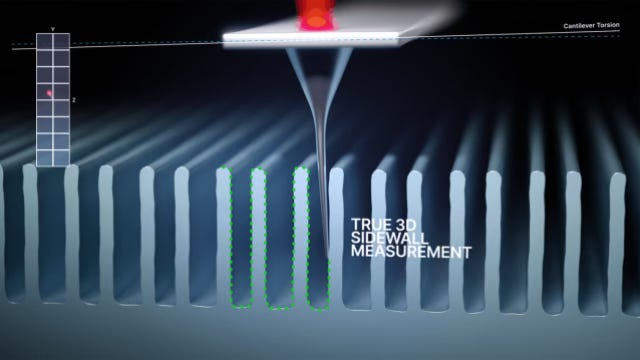
🔬 As chips go vertical, metrology struggles to keep up (EE Times)
With gate-all-around transistors, 3D NAND and stacked chiplets, the industry’s measurement tools are hitting their limits. EE Times explores how metrology is racing to see inside structures that are increasingly buried, vertical, and atomic-scale.
💾 SK hynix advances DRAM and NAND roadmap: targets 3x wafer output by 2034, 375-layer NAND at year-end (Trendforce)
SK hynix laid out an aggressive roadmap: tripling wafer output by 2034 and shipping 375-layer NAND by the end of this year, as the company races to keep up with AI-driven memory demand.
🤝 Intel doubles down on 14A: Cadence signs multi-year pact to co-optimize foundry’s crown jewel process tech (WCCFtech)
Intel and Cadence signed a multi-year agreement to co-optimise EDA tools and IP for Intel’s 14A node — the process Intel is betting its foundry future on, and the same one Musk’s Terafab plans to use.
🏭 Analyzing TSMC’s fab expansion roadmap: multi-fab N2 ramp, CoWoS, SoIC, and uncorking bottlenecks (Tom’s Hardware)🔒
A detailed breakdown of TSMC’s global expansion: the multi-fab N2 ramp, CoWoS and SoIC advanced packaging capacity, and where the bottlenecks are finally starting to clear.
🇪🇺 GlobalFoundries and Qualinx demonstrate first European sovereign manufacturing flow for security-critical semiconductors (Qualinx)
Delft-based Qualinx and GlobalFoundries demonstrated the first fully European sovereign manufacturing flow for security-critical chips — a milestone for EU ambitions around technological sovereignty.
🤖 NVIDIA challenger d-Matrix starts chip production with Microsoft backing (CNBC)
d-Matrix entered full production of its Corsair inference chip, which it claims is 10x faster than a GPU. By tightly integrating SRAM and compute on a single die, the design sidesteps the HBM shortage entirely — and Microsoft is among the backers.
🤖 Google reportedly books Intel for more than 3 million TPUs in 2028 (Tom’s Hardware)
Google has reportedly reserved Intel Foundry capacity for over 3 million TPUs in 2028 — a massive vote of confidence in Intel’s 14A-era manufacturing and a sign that hyperscalers are serious about diversifying beyond TSMC.
💰 Anti-NVIDIA data center startup is valued at $1.55 billion in new funding round (The Wall Street Journal) 🎁
TensorWave, a cloud-computing startup that exclusively uses AMD hardware, closed a $350 million Series B led by AMD and Magnetar Capital — nearly quadrupling its valuation to $1.55 billion. CEO Darrick Horton: “I don’t like buying things from monopolies. You don’t have a lot of leverage.”
📈By the numbers📉
📊 SEMI reports global semiconductor equipment billings increased 14% year-over-year in Q1 2026 (SEMI)
Global semiconductor equipment billings grew 14% year-on-year in the first quarter of 2026, as fabs worldwide keep expanding capacity to meet AI demand.
📈 TSMC revenue, demand and capacity outlook for 2026 (DigiTimes)🔐
DigiTimes breaks down TSMC’s latest revenue figures and the demand-versus-capacity picture for the rest of 2026, with AI orders continuing to outstrip what the foundry can build.
⚡ Gartner says data centre electricity demand to grow 26% in 2026 (Gartner)
Gartner forecasts data centre electricity demand will grow 26% in 2026 — yet another data point showing that power, not silicon, is becoming the binding constraint on the AI buildout.
❤️For the love of tech❤️
“The internet appeared as a powerful tool, but still a bounded one. Something that could be folded into domestic life without completely upending its order. Seen from today, that scene now seems strange. It’s not nostalgia. It’s something else: the distance left by an idea that no longer holds. Because what that desk organized wasn’t just devices. It organized an expectation: that the internet could be contained. Contained in a place, a schedule, a shared practice.”
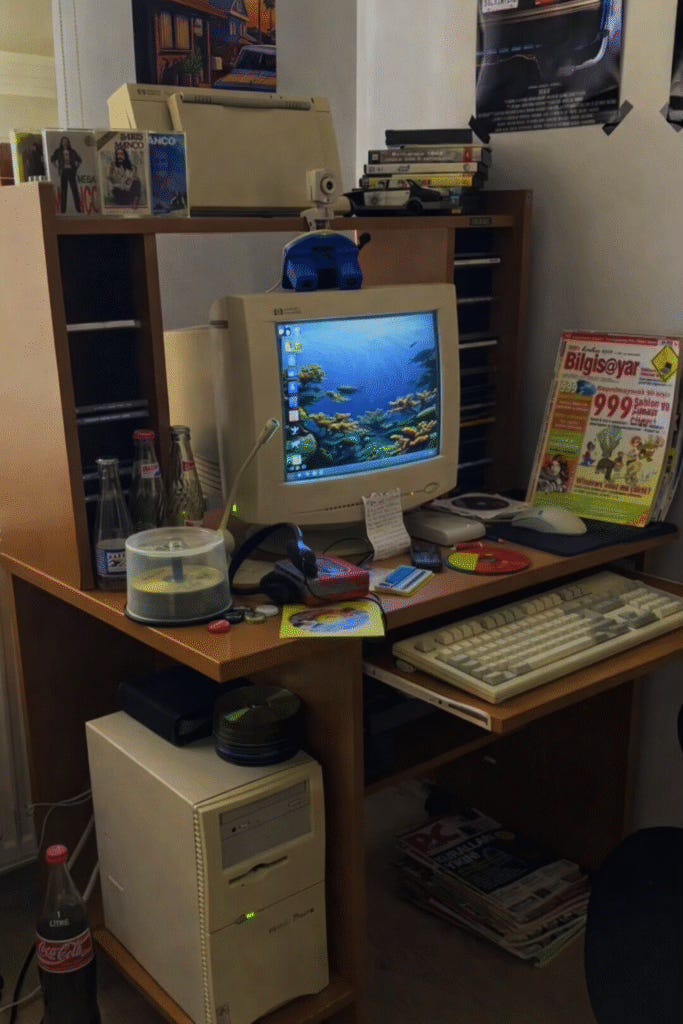
🖥️ The utopia of the family computer (Mud Map Magazine)
A nostalgic essay on the era of the shared family computer (that beige box in the study that the whole household negotiated over) and what was quietly lost when computing became personal, portable, and private.
Always Be Curious is the personal newsletter of Sander Hofman, Communications Manager at ASML. Opinions expressed in the introduction of this curated newsletter are my own and do not necessarily reflect those of my employer.