
Always Be Curious #314: Korea's bullish investments, the Rubin observatory, and Neuralink's transdural procedure
This week in ABC: Korea goes all-in on AI, the Rubin Observatory starts its 10-year Legacy Survey of Space and Time, and Neuralink performs a first in clinical trials

Sup Curious Clan! ✌️ The chip world this week was all about big, bigger…and perhaps a little too big? South Korea unveiled a jaw-dropping $1 trillion push into memory fabs, AI data centers, and humanoid robots, with Samsung and SK Hynix alone putting $585 billion into new plants (President Lee called semiconductors, physical AI, and data centres “the triple axis for a great leap forward”). On the more grounded end of the spectrum, Dr. Ian Cutress took a hard look at Substrate, the startup styling itself as a $1 trillion+ “bet against ASML”: he flagged the startup’s lack of visible lithography specialists, suspiciously AI-generated hiring profiles, and completely unverified accelerator metrics, contrasting the hype with the multi-billion-dollar engineering walls that forced even IBM to abandon industrial X-ray lithography decades ago. Meanwhile, Intel Foundry broke ground on a new facility in Santa Clara, bringing advanced chipmaking back to the heart of Silicon Valley, and NVIDIA reportedly scrapped the quad-die design of its Rubin Ultra GPU over manufacturing concerns.
Over in the round-up, the story that made me do a double take: scientists have built a device that revives eyeballs from dead donors. 👁️ It’s called the ECaBox, and it keeps freshly removed eyes alive using perfusion, which is just a fancy word for feeding the organ the oxygen and nutrients it would normally get inside a body. The upshot: treated eyes degrade far more slowly and seem to hold onto their ability to transmit electrical signals, which is the thing you need if a transplanted eye is ever going to actually see. Whole-eye transplants have been tried before (most memorably in a 2023 face transplant) but the eye couldn’t see. This could be the missing piece. Sci-fi organ-in-a-box energy, except it’s real. 🔬
And because it’s summer and we’re allowed a little wonder, two lovely reads to close on. Scientific American published a meditation on what will happen to the moon in the far future (short version: it’s slowly drifting away from us, and in tens of billions of years the dying sun may fling it off entirely, so enjoy the view while you’ve got it 🌕), and the Rubin Observatory has begun its 10-year survey to film what one scientist called the greatest cosmic movie ever, imaging the entire southern sky every few nights to catch “even the things we don’t know we’re looking for yet.” 📸
Have a good week, stay safe and sound,

👨💻The round-up in sci-tech💡

🔭 The Rubin Observatory begins filming the greatest cosmic movie ever (The New York Times) 🎁
The Vera C. Rubin Observatory has officially begun its 10-year Legacy Survey of Space and Time, using the world’s largest digital camera to image the entire southern sky every few nights. The survey is designed to see everything, in the words of one scientist, “even the things we don’t know we’re looking for yet.”
🎮 Video Game History Foundation founder says piracy remains the only viable game preservation method (TechSpot)
After Sony announced it will stop making physical PlayStation discs from 2028 and shutter the PS3 and PS Vita storefronts, VGHF director Frank Cifaldi agreed with the blunt assessment that piracy is currently the only working form of game preservation. He blames the Entertainment Software Association for blocking legal routes for museums and archives.
🎥 The first transdural procedure (Neuralink)
Neuralink updated the surgical procedure for its brain implant. The dura is the brain's armor: a membrane so tough that a surgeon normally cuts through it with a scalpel. For the first time in our clinical trials, Neuralink inserted the electrode threads of the implant straight through the dura and into the cortex, keeping the dura intact.
👁️ A device that revives eyeballs from dead donors could make eye transplants possible (MIT Technology Review)
Researchers built the ECaBox, a device that keeps freshly removed eyeballs alive using perfusion (supplying oxygen and nutrients as the body would). Treated eyes degrade more slowly and appear to retain the ability to transmit electrical signals, a step toward one day making whole-eye transplants that can actually see.
🌕 What will happen to the moon in the far future? (Scientific American)
Phil Plait traces the moon’s long goodbye: tidal forces are slowly pushing it away from Earth, but in tens of billions of years the dying sun’s transformation into a white dwarf could destabilise its orbit entirely, flinging it free or pulling it into a collision. Better enjoy the view now.
🌕 NASA wants to send spare nuclear-powered Mars rover to the lunar surface (Space.com)
During its latest Moon Base update, NASA announced new lunar lander contracts for Astrobotic, Firefly, and Intuitive Machines, plus a surprise: it may repurpose a spare engineering model of its nuclear-powered Mars rovers into a lunar explorer named PROMISE, headed for the moon’s south pole. As administrator Jared Isaacman put it: “We are in the business of the near impossible, so why not?”
🤓This week in chips⚠

💰 SK Hynix plans $713 billion domestic investment (EE Times)
EE Times details SK Hynix’s share of South Korea’s chip megaproject wave: a domestic investment programme worth $713 billion, spanning new fabs and the capacity buildout needed to keep feeding the AI memory boom.
🇰🇷 South Korea positions itself as a global chip hub around Samsung and SK Hynix (eeNews Europe)
European trade press coverage of South Korea’s sweeping plan to turn the country into a nationwide semiconductor ecosystem, anchored by Samsung and SK Hynix and new fab clusters in the southwest.
🇰🇷 South Korea to spend $1 trillion on more memory chip production and humanoid robots (Ars Technica)
South Korea’s government and top tech companies are committing $1 trillion to megaprojects spanning memory fabs, AI data centres, and humanoid robots by 2028. The largest piece: Samsung and SK Hynix putting $585 billion into new fabrication plants. President Lee Jae Myung: “Semiconductors, physical AI, and AI data centers are the triple axis for a great leap forward.”

🛰️ The hype around orbital data centers (IEEE Spectrum)
IEEE Spectrum takes a critical look at the growing buzz around putting data centres in orbit, weighing the promise of free cooling and solar power against the brutal economics of launch, maintenance, and bandwidth.
💾 Kioxia and Sandisk begin production of 10th-generation 3D Flash Memory products at Kitakami Plant Fab2 (Kioxia)
Kioxia and Sandisk announced the start of production for their 10th-generation 3D Flash memory technology at Fab2 (K2) at the Kitakami Plant in Iwate Prefecture in Japan. The milestone comes as the companies continue to drive meaningful, multi-year bit growth to address the strong demand for their innovative flash memory technology
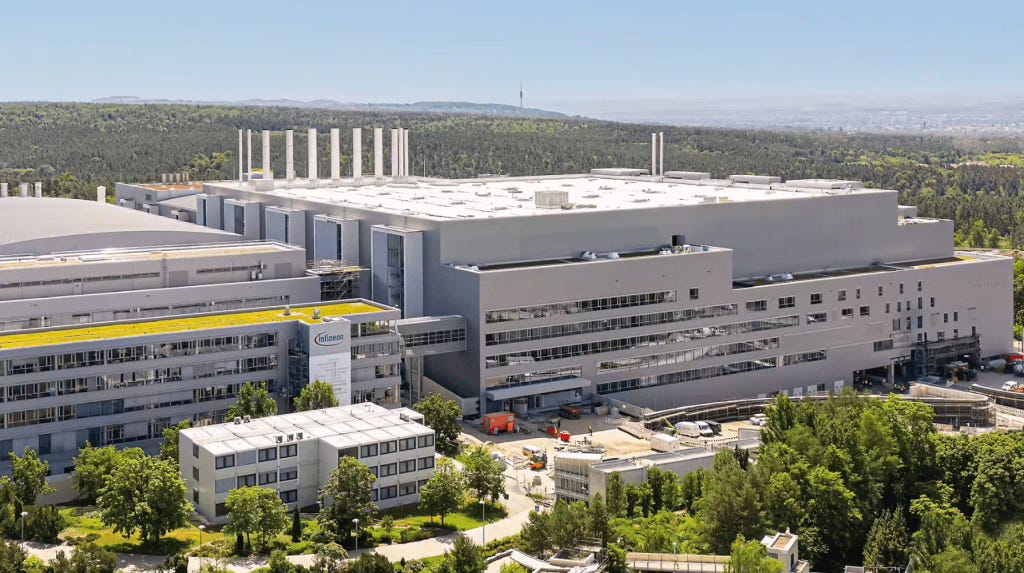
📰 Infineon opens the world’s largest fab for power semiconductors and analog/mixed-signal technologies in Dresden (Infineon)
Infineon opened the Smart Power Fab in Dresden several months ahead of schedule. The new plant, with an investment volume of five billion euros, is the largest single investment in Infineon’s history and one of the largest investment projects in Germany, creating 1,000 new, direct jobs. The new fab doubles Infineon’s manufacturing capacities at the Dresden site, thus creating the world’s largest factory for intelligent power semiconductors and analog / mixed-signal technologies.
🏗️ Intel Foundry breaks ground on new manufacturing facility in Santa Clara, Silicon Valley (WCCFtech)
Intel Foundry has broken ground on a new manufacturing facility in Santa Clara, bringing advanced chipmaking back to the heart of Silicon Valley as the company scales up its foundry ambitions.
💰 AI chip startup Etched lures Jane Street and TSMC-linked VC as investors (Bloomberg)🔐
Etched emerged from stealth with $800 million raised, over $1 billion in signed contracts for its transformer-specific Sohu chip, and a $5 billion valuation. Investors include Jane Street (more than $100 million), a TSMC-linked venture firm, Peter Thiel, Geoffrey Hinton, and Fei-Fei Li. First shipments start this summer.
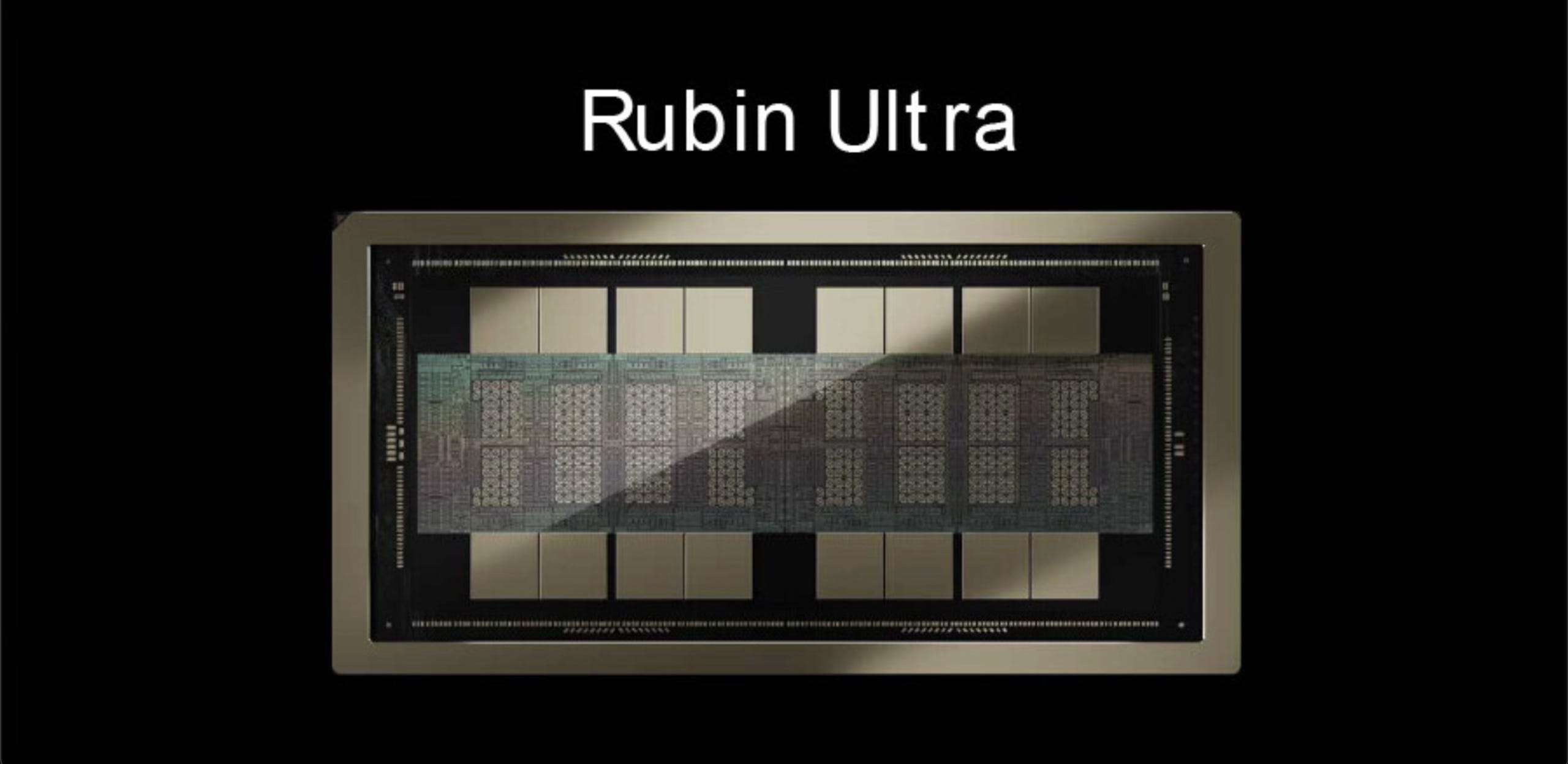
🔄 NVIDIA reportedly cancels quad-die Rubin Ultra GPU in favor of dual-GPU design (Tom’s Hardware)
NVIDIA has reportedly scrapped the quad-die design of its Rubin Ultra GPU in favour of a dual-GPU approach, with the complex four-die package purportedly abandoned over manufacturing execution concerns.


🔬 Apple M5 Pro package analysis: TSMC hybrid bonding (TechInsights)
TechInsights tears down Apple’s M5 Pro and finds TSMC hybrid bonding inside, confirming that the advanced die-stacking technique has arrived in high-volume consumer silicon.
🇯🇵 Japan ramps up AI investment as industrial infrastructure (DigiTimes)
DigiTimes reports on Japan’s push to treat AI as core industrial infrastructure, with growing public and private investment across compute, chips, and data centres.
🧠 Artificial neurons on silicon chips (IEEE Spectrum)
IEEE Spectrum covers research on building artificial neurons directly in silicon, a neuromorphic approach that mimics how biological brains compute with a fraction of the energy of conventional chips.
🎥 The $1 trillion+ bet against ASML: Substrate (TechTechPotato)
“Finally, I look back at the historical engineering walls that forced giants like IBM to abandon industrial X-ray development decades ago, contrasting those multi-billion-dollar lessons with Substrate's lack of visible lithography specialists, suspicious AI-generated hiring profiles, and completely unverified accelerator metrics.”
🤝 Tesla hires 17-year Intel veteran responsible for billion-dollar fab startups (Tom’s Hardware)
Tesla has hired Gary Jiang, a 17-year Intel veteran with a track record of standing up billion-dollar fabs, likely to oversee fab efforts for Terafab’s licensing of Intel’s 14A process. The Musk chip project keeps staffing up.
🤖 AI is designing chips at UCLA’s teaching fab (IEEE Spectrum)
IEEE Spectrum reports on work at UCLA bringing AI into chip design and fabrication, part of a broader push to train the next generation of semiconductor engineers with AI-assisted tools.
💧 The hidden cost of AI: how data centers are draining local water supplies (The Wall Street Journal) 🎁
The WSJ investigates how the explosive growth of AI data centres is straining local water supplies, as facilities consume vast quantities for cooling and communities begin to push back against the resource demands of the AI boom.
📈By the numbers📉
📊 Catalyzing competitiveness: where investment happens and why (McKinsey Global Institute)
The McKinsey Global Institute maps where global investment flows and why, examining what makes countries and regions attractive for capital in an era of industrial policy and supply chain restructuring.
🇪🇺 EU semiconductor geopolitical risk survey: outlook 2026-2031 (Institut Montaigne)
The French think tank surveys the geopolitical risks facing Europe’s semiconductor ambitions over the next five years, from export controls and supply chain chokepoints to the EU’s dependence on foreign technology.
📦 Gartner identifies top supply chain technology trends for 2026 (Gartner)
Gartner’s annual list of the technology trends reshaping supply chains in 2026, with AI-driven planning and resilience tooling high on the agenda.
❤️For the love of tech❤️

🎂 What did Hubble see on your birthday? (NASA)
NASA’s delightful interactive tool: enter your birthday and see what the Hubble Space Telescope was photographing on that date. Thirty-five years of observations mean there is a cosmic wonder for every day of the year.
Always Be Curious is the personal newsletter of Sander Hofman, Communications Manager at ASML. Opinions expressed in the introduction of this curated newsletter are my own and do not necessarily reflect those of my employer.